I know I can be pedantic, but I like to think I'm not excessively so. I deny that I'm a grammar Nazi. I understand that language is constantly shifting, and that this is not necessarily a bad thing. Some departures from standard grammar–I hesitate even to say "correct," so wary am I of being overly judgmental–are enhancements in the way of color, or meet some need not provided by the standard.
I notice the first one sometimes in certain constructs that less-educated people use. For instance: in the opening episode of The Wire, a character commenting on the death of a friend: "I guess sometimes life just be that way." "Be" is wrong, but it has a flavor that "Life is just that way" doesn't. I see a lot of memes that use, for lack of a better word, black English, and sometimes they're funny or punchy in a way that they wouldn't be in standard English. Like "be like":
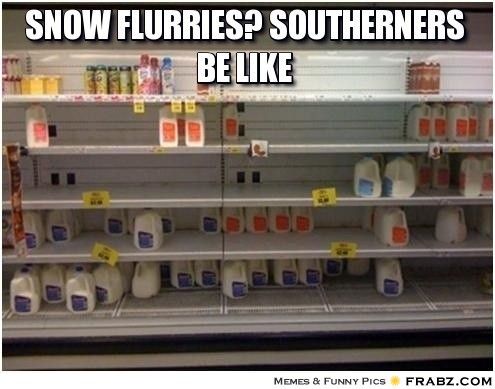 And as for the second: I'm becoming reconciled to the use of "they/them/their" for the third-person singular when the sex of the person is unknown. You don't have to be a feminist to find "he/him/his" odd-sounding when the person referred to is most likely, or just as likely, to be female. I felt it often in my job in software services, where the office workers using the software were far more likely to be women than men. "Each user can set his own preferences." But 90% of them are women, and we all know it. "Each user can set her own preferences"–but isn't it just a touch patronizing to assume the user is female? "Each user can set his or her own preferences"–that's fine for one sentence, but it's clumsy if you need to repeat it. "Each user can set their own preferences"–yes, that grates mightily on my ear, but I guess I have to get used to it.
But there is no justification for this kind of thing:
This recording will repeat.
When the process is complete, a message displays.
The screen populates with the information.
Dr. Banner transforms into The Hulk.
She dies, then resurrects as a zombie.
If your tax doesn't calculate…
Is it really so hard, is it really too much trouble, to say "will be repeated," "is displayed", and so on? I'm not sure exactly what this syndrome signifies but I'm sure it's something bad.
And by the way the title is partly in jest. Something else that annoys me is the declaration that any opposition to, or just neglect of, a thing constitutes "a war on…" the thing.
 Light On Dark Water
Leave a comment